The short answer
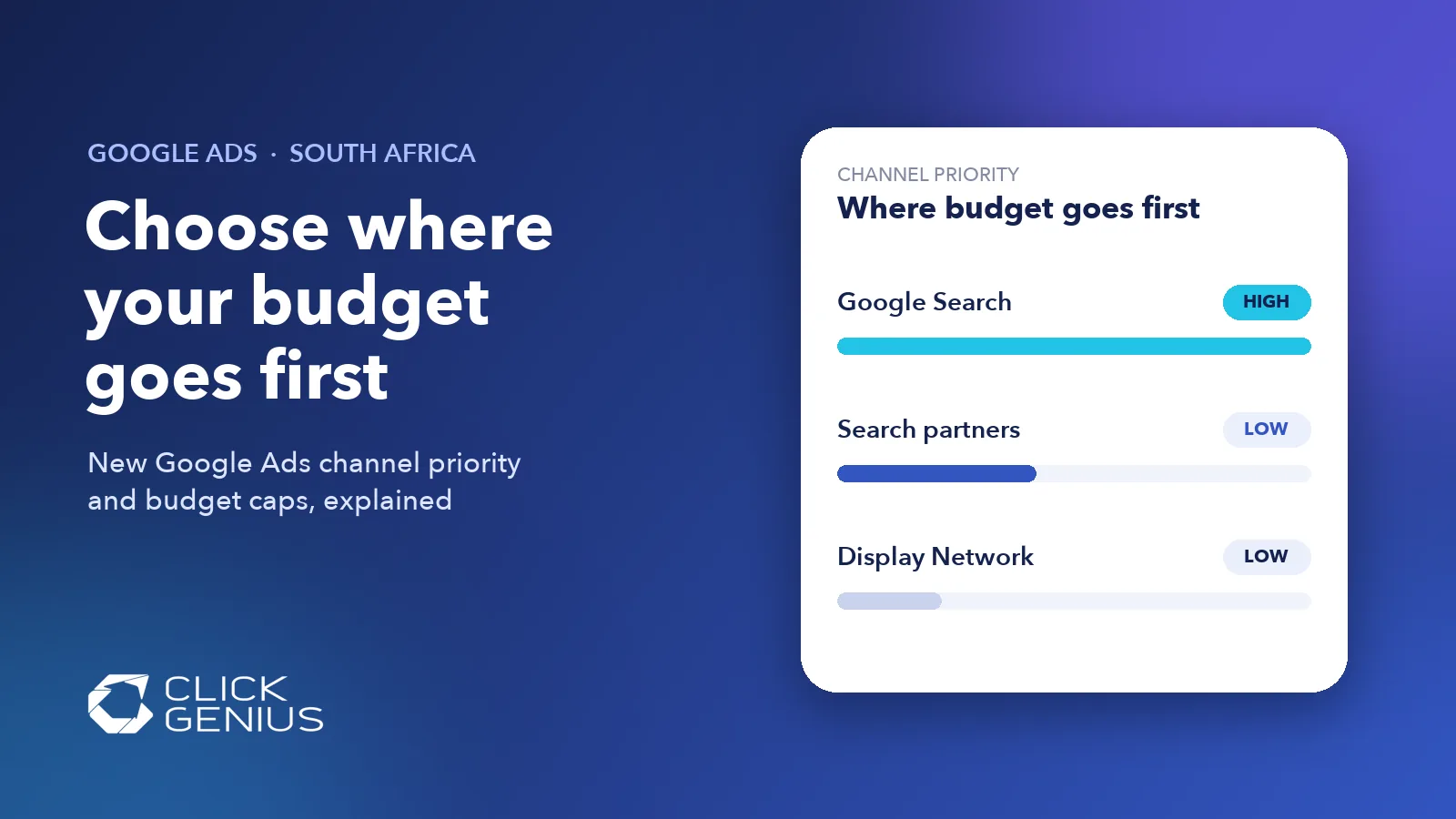
Google Ads now lets you rank the channels inside a campaign as High or Low priority. High-priority channels are funded first, and you can cap Low-priority channels at a percentage of your daily budget. It covers Search, Shopping, Performance Max and Demand Gen, starts rolling out from 15 October 2026, and every channel is High priority until you change it.
Does this apply in South Africa?
Yes, but you may not see it in your account yet. Google's announcement on 14 October 2026 says the controls roll out globally, and its help page says the rollout starts on 15 October 2026 and moves "progressively by campaign type". South Africa is not named separately and Google gives no per-country dates, so check your campaign settings over the next few weeks rather than expecting it on day one.
What Google announced
Two connected controls: channel prioritisation and budget allocation. Google calls them "channel prioritization" and "budget allocation", and both are optional.
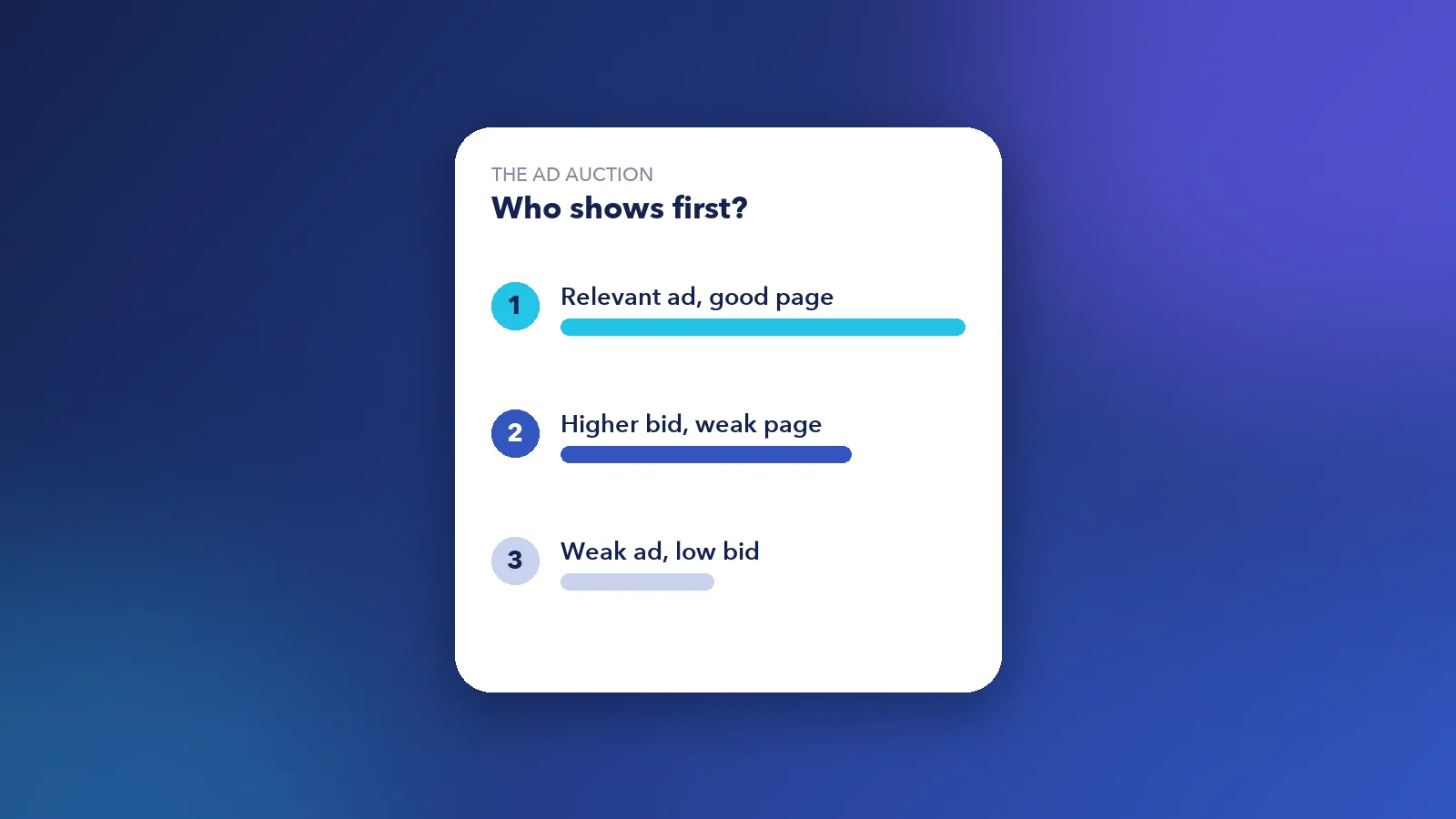
- Channel prioritisation: mark each channel as High or Low priority. Google says campaigns will "fully fund high-priority channels" before giving what is left to low-priority ones.
- Budget allocation: for Low-priority channels, set the maximum share of your daily budget they can use. Setting a channel to 0% means Google won't spend on it.
Which channels you can rank depends on the campaign type:
| Campaign type | Channels you can prioritise | Budget cap? |
|---|---|---|
| Search | Google Search, search partners, Google Display Network | Yes |
| Shopping | Google Search, search partners | Yes |
| Performance Max | "Google channels" as one group, search partners, Google Display Network | Yes |
| Demand Gen | "Google channels" as one group, Google Display Network | No |
The important detail for Performance Max: Google groups Search, YouTube, Maps, Gmail and Discover together as "Google channels". You cannot tell Performance Max to favour Search over YouTube with this setting. What you can control is how much goes to search partners and the Display Network, the two places where many accounts quietly lose budget.
How priority and allocation work
Priority only changes anything when your campaign runs out of budget; the cap applies either way. These are the rules from Google's help page, in plain language:
- Everything starts as High priority. If you do nothing, nothing changes.
- You can set it at three levels: the whole account (per campaign type), a shared budget, or a single campaign. Campaign settings override the account default.
- The cap is a percentage of your average daily budget, not of what you actually spend. On a R500 daily budget, a 10% cap on the Display Network means Google aims to keep Display at or below about R50 a day.
- The cap is "best-effort". Google says daily spend on a capped channel may occasionally go over it. It resets every day, and unused amounts do not roll over.
- Priority does nothing if you are not limited by budget. If your campaign never spends its full budget, every channel gets what it can win anyway. Only the caps still apply.
- It must be set inside each client account. Google says you cannot set it from a manager account, so an agency has to configure it account by account or campaign by campaign.
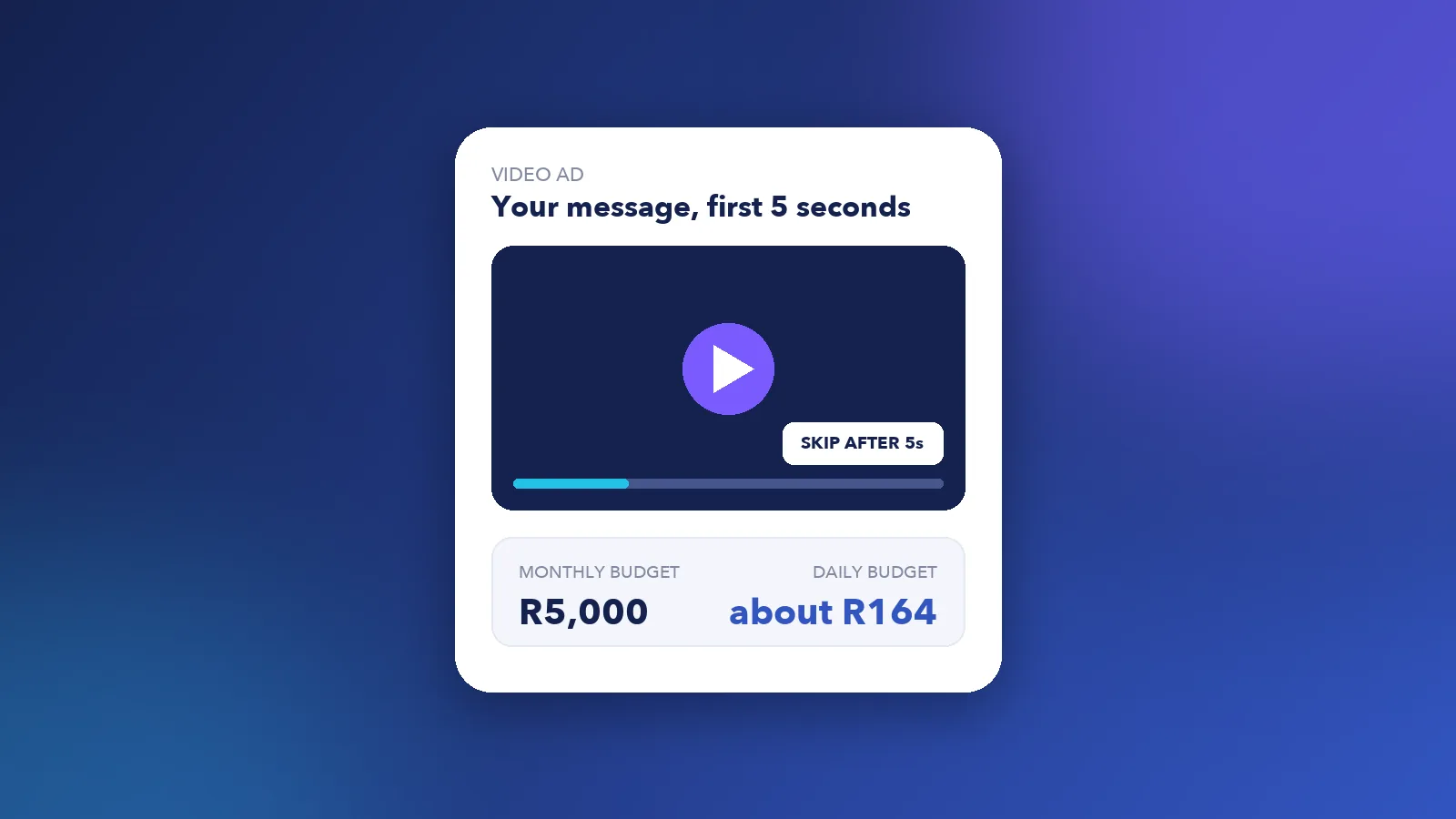
A note on budgets: Google can already spend up to twice your average daily budget on a busy day, while keeping the month within 30.4 times it. If you budget R15,000 a month, your daily budget is about R493, and a 10% cap on a low-priority channel works out to roughly R49 a day. Our guide to how Google Ads works explains the budget rules in more detail.
How it behaves with your bid strategy
With target-based bidding, priority only kicks in when budget runs short; with "maximise" bidding, high-priority channels always spend first. Google's help page splits it like this:
| Bid strategy | Not limited by budget | Limited by budget |
|---|---|---|
| Target CPA, Target ROAS, Target CPC | Priority doesn't change where spend goes; caps still apply | High priority spends first within your target; leftover budget goes to low priority only if it can hit the target |
| Maximise conversions, Maximise conversion value, Maximise clicks, Manual CPC, Target impression share | High priority first, the rest to low priority | High priority first, the rest to low priority |
Many smaller South African accounts run on Maximise conversions or Maximise clicks with a tight budget. That is exactly where this setting has the most effect: you can make sure Google Search gets the money before search partners or Display do.
The February 2027 Display change
If your Search campaigns have the Display Network switched on, the way that spend is handled changes in February 2027. Google says Search campaigns with Display Expansion will move to the new system automatically, "which may shift spend" between Search, search partners and Display.
- To keep things as they are, Google says to set the Display Network to Low priority with a 50% budget allocation.
- If you use Target impression share bidding, the Display Network will stop serving in those Search campaigns.
- If you set priorities before February 2027, your settings apply straight away.
In our experience, many SA Search campaigns still have the Display Network and search partners switched on from the day they were built, often without the owner knowing. That makes this the right moment to decide on purpose. Our check of what Google Ads changes by default covers other settings worth reviewing at the same time.
What to do now
Look at where your money goes today, then decide your priorities before Google decides for you.
- Check your Search campaign networks. In each Search campaign's settings, see whether search partners and the Display Network are on. Segment your results by network to see what each actually delivered in enquiries, not just clicks.
- Open the Performance Max channel report. Google's channel performance report (Campaigns, then Insights and reports, then Channel performance) shows spend and conversions by channel.
- Keep your best channel High priority. For most local service businesses, such as a dental practice in Umhlanga or a solar installer in Pretoria, that is Google Search.
- Set weak channels to Low with a cap, not straight to 0%. A small cap (say 5% to 10%) keeps some data flowing so you can judge them. Use 0% only where you have clear evidence a channel brings no business.
- Make sure conversions are tracked properly first. If calls and WhatsApp enquiries are not tracked, every channel looks worse than it is and you may cut the wrong one.
- Diarise February 2027 for any Search campaign that still has Display switched on.
If you run both Performance Max and Search, also read our post on Performance Max taking budget from your Search campaigns. Channel priority works inside a campaign; it does not stop two campaigns competing for the same searches.
Our free Google Ads audit shows how much of your budget goes to search partners and the Display Network, what those clicks produced, and which priority settings we would use. You get it within 48 hours.
What is still unknown
The main open questions are timing and reporting.
- When it reaches each South African account. Google only says "progressively" and "over the next months".
- How close "best-effort" caps stay. Google says spend may occasionally exceed them; we will only know how often once accounts use them.
- Better Search channel reporting. Search Engine Journal reports expanded channel reporting for Search is expected in early 2027 and Demand Gen testing from November. Google's own pages do not give those dates yet.
- Tool support. Google's help page says Google Ads API and Editor support is "coming soon".
Frequently asked questions
Do I have to change anything right now?
No. The settings are optional and every channel starts as High priority, so your campaigns keep running as they do today. The one date to plan for is February 2027, when Search campaigns with the Display Network switched on move to the new system automatically.
Can I stop Performance Max spending on YouTube with this?
No. In Performance Max, Google groups Search, YouTube, Maps, Gmail and Discover together as "Google channels", so you cannot rank them against each other. You can lower the priority of, or cap, search partners and the Google Display Network.
Is the budget cap a hard limit?
No. Google describes it as best-effort, so spend on a capped channel may occasionally go over on a given day. Caps reset daily and unused amounts do not roll over. Setting a Low-priority channel to 0% stops spend on that channel.
Should I switch off search partners and the Display Network?
Not automatically. Check what each network has delivered in tracked enquiries or sales first. If one produces clicks but no business, set it to Low priority with a small cap, or 0% if the evidence is clear.
Is channel prioritisation available in South Africa?
Google says it is rolling out globally, starting on 15 October 2026 and moving progressively by campaign type, with no country-by-country dates. South African advertisers should see it in their accounts over the coming weeks or months.
The take-away
For the first time, you can tell Google Ads which channels deserve your budget first and put a ceiling on the rest. That is good news for South African businesses on tight budgets, but only if the choices are based on tracked enquiries rather than guesswork. Check your networks, set your priorities, and do it before February 2027 makes the Display decision for you.
Not sure where your budget is going? Get a free Google Ads audit, see our Google Ads pricing in South Africa, or find out how our Google Ads management works.